Have you ever felt discomfort in your chest while working and dismissed it as fatigue, stress, or a stomach problem? When the discomfort subsides, you may feel there is no reason to think about it again. It is understandable that many people search for “five signs a heart attack is about to happen” to learn which symptoms to watch for. However, a heart attack does not always produce clear warning signs beforehand.
Some people experience severe chest pain. Others notice only subtle symptoms, such as shortness of breath, nausea, or unusual fatigue. These symptoms may appear suddenly or develop gradually. In some cases, a heart attack even occurs without any noticeable symptoms.
A heart attack, also called a myocardial infarction, occurs when blood flow to part of the heart muscle is acutely disrupted, depriving the tissue of oxygen and causing injury. This condition is commonly associated with a blockage in a coronary artery. Recognizing the symptoms, therefore, is not about predicting when a heart attack will happen. It is about knowing when to seek immediate medical attention.
Recognizing the 5 Warning Signs of a Heart Attack
Five important groups of symptoms include chest pain or pressure, pain that spreads to other areas, shortness of breath, cold sweats accompanied by nausea or vomiting, and unusual fatigue or feeling faint.
However, not everyone experiences the same pattern of symptoms. Some patients have symptoms so pronounced that they interfere with daily activities. Others experience subtler symptoms that resemble digestive problems, muscle conditions, or other health issues. The following five warning signs do not represent a sequence of events or diagnostic criteria.
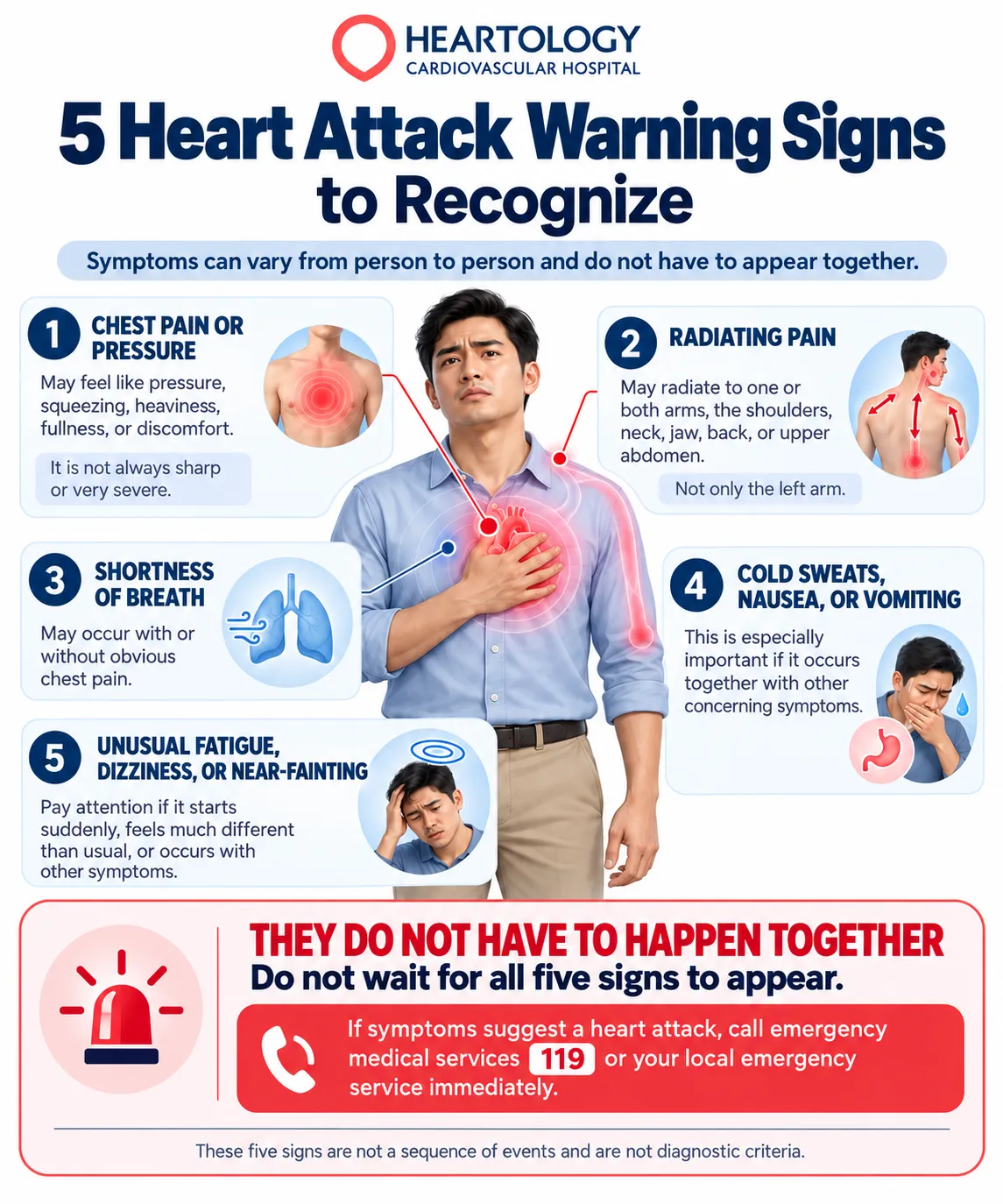
1. Chest Pain or Pressure
Chest pain or discomfort is one of the main symptoms of a heart attack. However, it does not always feel like a sharp or stabbing pain.
Some people describe the sensation as pressure, squeezing, heaviness, or fullness in the chest. The discomfort is commonly felt in the center of the chest, although its location may vary. Others experience a burning sensation in the chest and mistake it for a stomach-related problem.
The discomfort may last for several minutes or longer. Sometimes, it temporarily subsides before returning. Therefore, chest pain that comes and goes does not necessarily mean the condition is harmless.
For example, someone may experience chest pressure while working. After resting briefly, the discomfort eases, so they resume their activities. However, an improvement in symptoms is not enough to confirm that the underlying cause is harmless.
Not all chest pain originates from the heart. Nevertheless, if the discomfort is new, unusual, or suggestive of a heart attack, do not wait for the pain to become more severe before seeking emergency medical care.
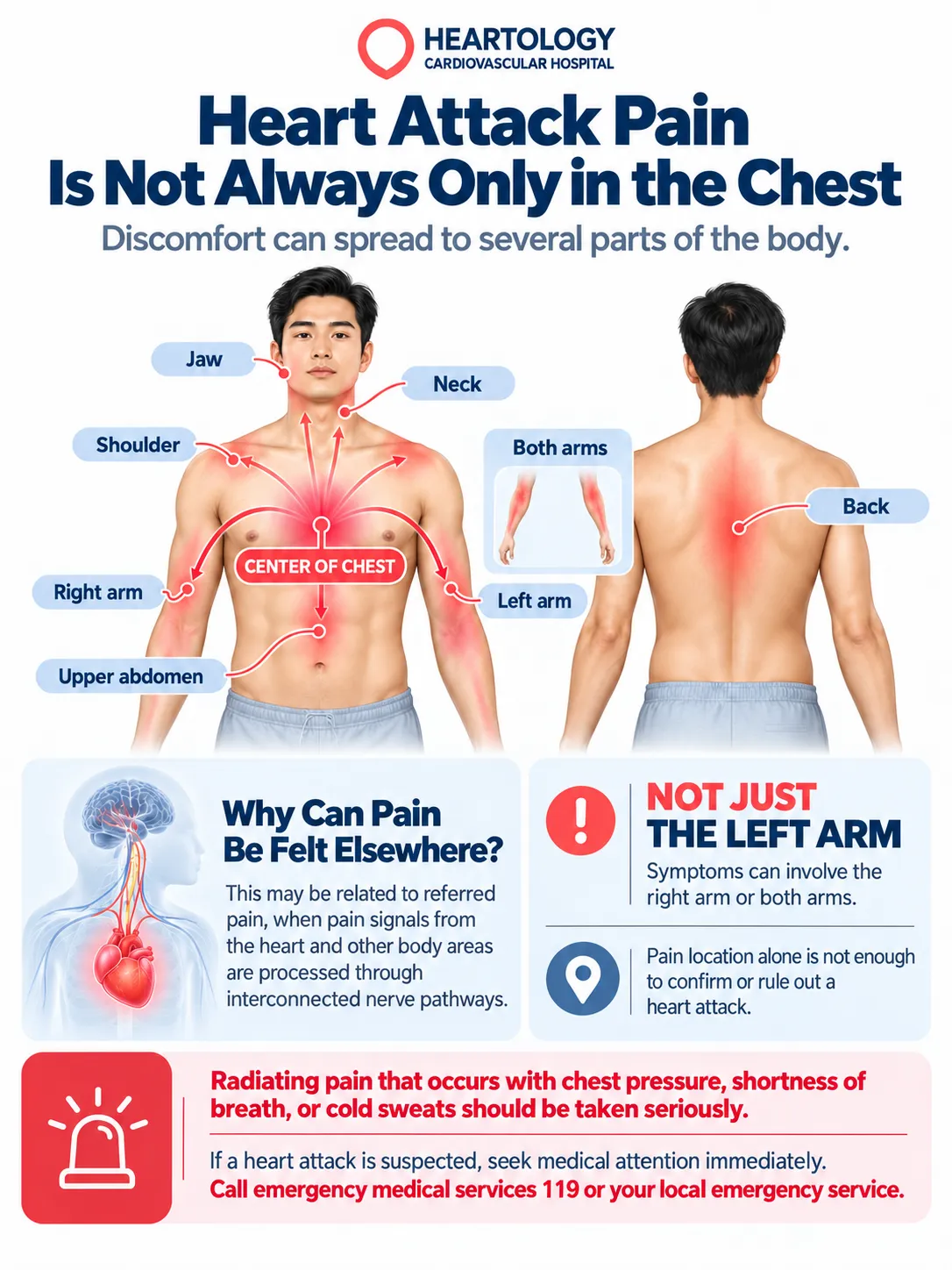
2. Pain That Spreads to the Arms, Jaw, or Back
A heart attack can also cause pain or discomfort outside the chest. Symptoms may be felt in one or both arms, the shoulders, neck, jaw, back, or upper abdomen.
This is related to a mechanism called referred pain. Pain signals from the heart and certain other parts of the body may be processed through interconnected nerve pathways. As a result, the brain may perceive pain in an area other than the primary source of the problem.
Many people recognize left arm pain as a possible sign of a heart attack. However, the discomfort can also involve the right arm or both arms at the same time.
The same applies to jaw or back pain. These symptoms should not automatically be attributed to muscle problems, particularly if they occur alongside chest pressure, shortness of breath, or cold sweats.
Conversely, aching in the shoulders, arms, or back can have many possible causes. The location of pain alone cannot confirm or rule out a heart attack. Doctors need to consider the full range of symptoms and the patient’s overall condition.
3. Shortness of Breath
Shortness of breath is another symptom that may accompany a heart attack. It can feel like difficulty taking a breath, labored breathing, or a sensation of not getting enough air.
In some patients, a heart attack can impair the heart’s ability to pump blood effectively. This may increase pressure in the blood vessels of the lungs, leading to shortness of breath.
Importantly, shortness of breath can occur with or without obvious chest pain.
Someone may notice that they become breathless more easily during activities that previously caused no difficulty. Others may experience shortness of breath even while resting.
However, shortness of breath is not exclusive to heart conditions. Lung disorders, anemia, and various other medical conditions can cause similar symptoms.
For this reason, do not determine the cause based solely on how the breathing difficulty feels. If it develops suddenly, is severe, or occurs with other symptoms suggestive of a heart attack, seek emergency medical attention immediately.
4. Cold Sweats, Nausea, or Vomiting
Not all heart attack symptoms involve pain. Some people experience symptoms that affect their overall physical condition, such as cold sweats, nausea, or vomiting.
Cold sweats can occur even when someone is not engaging in strenuous physical activity or spending time in a hot environment. This may be associated with a response from the autonomic nervous system, the part of the nervous system that automatically regulates bodily functions, including heart rate and sweating.
Some patients also experience nausea or discomfort in the upper abdomen. These symptoms may resemble digestive problems, making them difficult to recognize as possible signs of a heart condition.
However, cold sweats and nausea are not specific indicators of a heart attack. Various other medical conditions can also cause them.
What matters is recognizing when these symptoms occur in an unusual way, particularly alongside chest pressure, shortness of breath, or pain that spreads to other areas. Do not automatically dismiss this combination of symptoms as a minor illness or stomach problem without medical assessment.
5. Unusual Fatigue, Dizziness, or Feeling Faint
Fatigue is a common complaint, particularly after insufficient sleep or a demanding schedule. However, fatigue that feels markedly different from usual may also accompany a heart attack.
Some patients experience weakness that cannot easily be explained by their preceding activities. Others feel dizzy, lightheaded, close to fainting, or suddenly unable to continue what they are doing.
Nevertheless, fatigue alone is not enough to indicate a heart attack. Lack of sleep, anemia, infections, and various other conditions can cause similar symptoms.
Pay attention to changes from your usual physical condition. Did the weakness appear suddenly? Does it feel different from ordinary tiredness? Is it accompanied by chest pressure, shortness of breath, cold sweats, or a feeling that you might lose consciousness?
These questions can help you describe your condition to healthcare professionals, but they do not replace a medical examination. If you experience severe weakness, feel close to fainting, or develop other symptoms suggestive of an acute medical condition, seek immediate medical attention.
[hw_info_box]
type: quick_summary
title: Five Warning Signs to Recognize
icon: information
description: Ingat lima kelompok gejala berikut. Keluhannya dapat berbeda pada setiap orang dan tidak selalu muncul bersamaan.
point: Chest pain or pressure, including a feeling of heaviness or fullness.
point: Discomfort spreading to the arms, jaw, neck, or back.
point: Shortness of breath, with or without chest pain.
point: Cold sweats, nausea, or vomiting.
point: Unusual fatigue, dizziness, or feeling faint.
[/hw_info_box]
When Should You Seek Immediate Medical Attention?
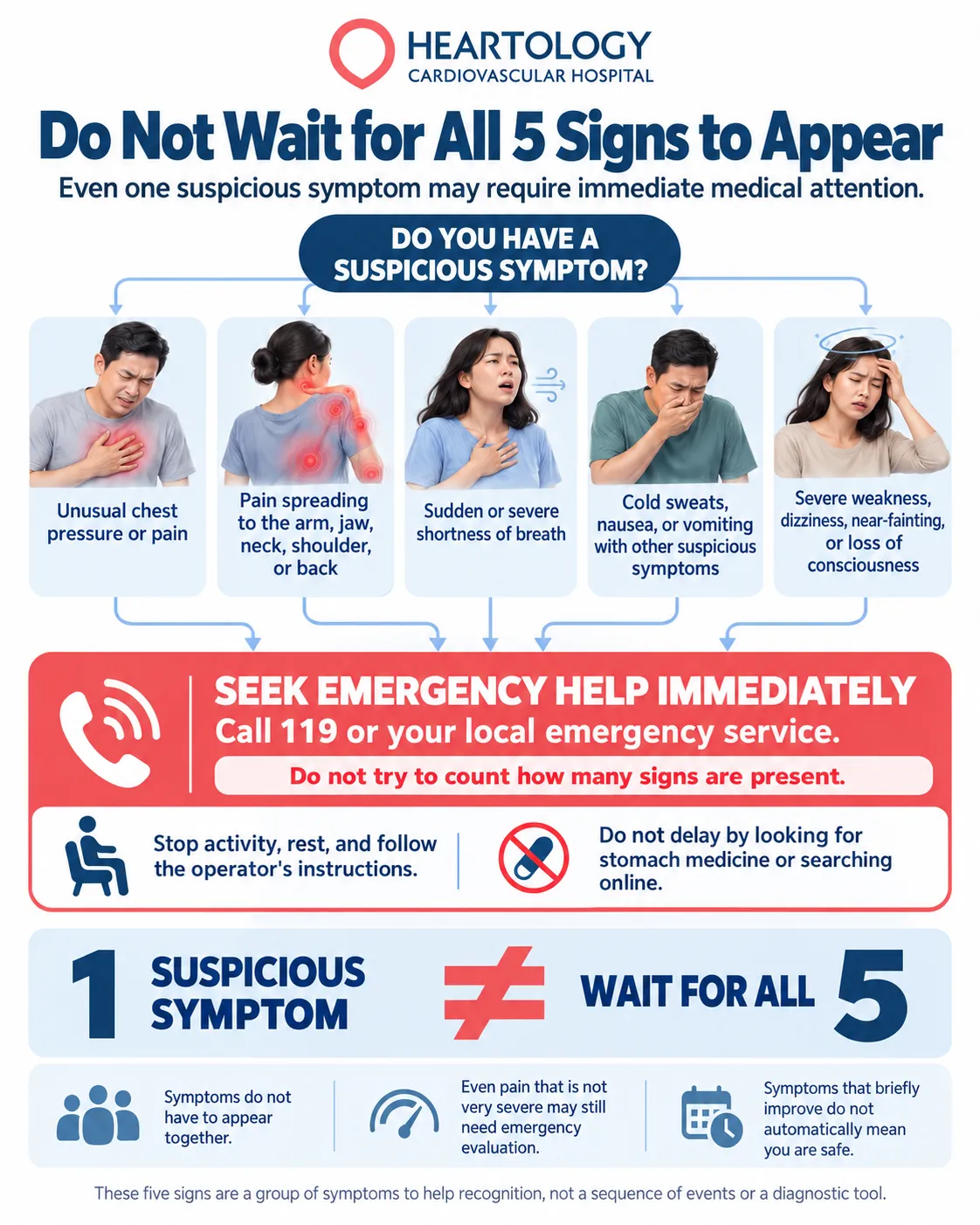
Seek emergency medical attention immediately if you experience symptoms suggestive of a heart attack, even if you are unsure of the cause. These may include unusual chest pressure, shortness of breath, pain spreading to other areas, cold sweats, or feeling faint.
A heart attack requires prompt treatment because disrupted blood flow can damage the heart muscle. The longer the heart tissue is deprived of oxygen, the greater the potential damage. Therefore, do not wait for every warning sign to appear or hope that the symptoms will resolve on their own.
Symptoms That Require Emergency Care
Symptoms that warrant immediate medical attention include:
- Suspicious chest pressure, pain, or discomfort that persists or recurs.
- Discomfort spreading to the arms, jaw, neck, shoulders, or back.
- Sudden or severe shortness of breath, including when there is no chest pain.
- Cold sweats, nausea, or vomiting accompanied by other concerning symptoms.
- Severe weakness, dizziness, feeling faint, or loss of consciousness.
These symptoms do not have to occur together. A heart attack is still possible even when the pain is not particularly severe. If you suspect that your symptoms may be related to a heart attack, do not delay getting help while trying to determine how serious the condition is yourself.
What Should You Do?
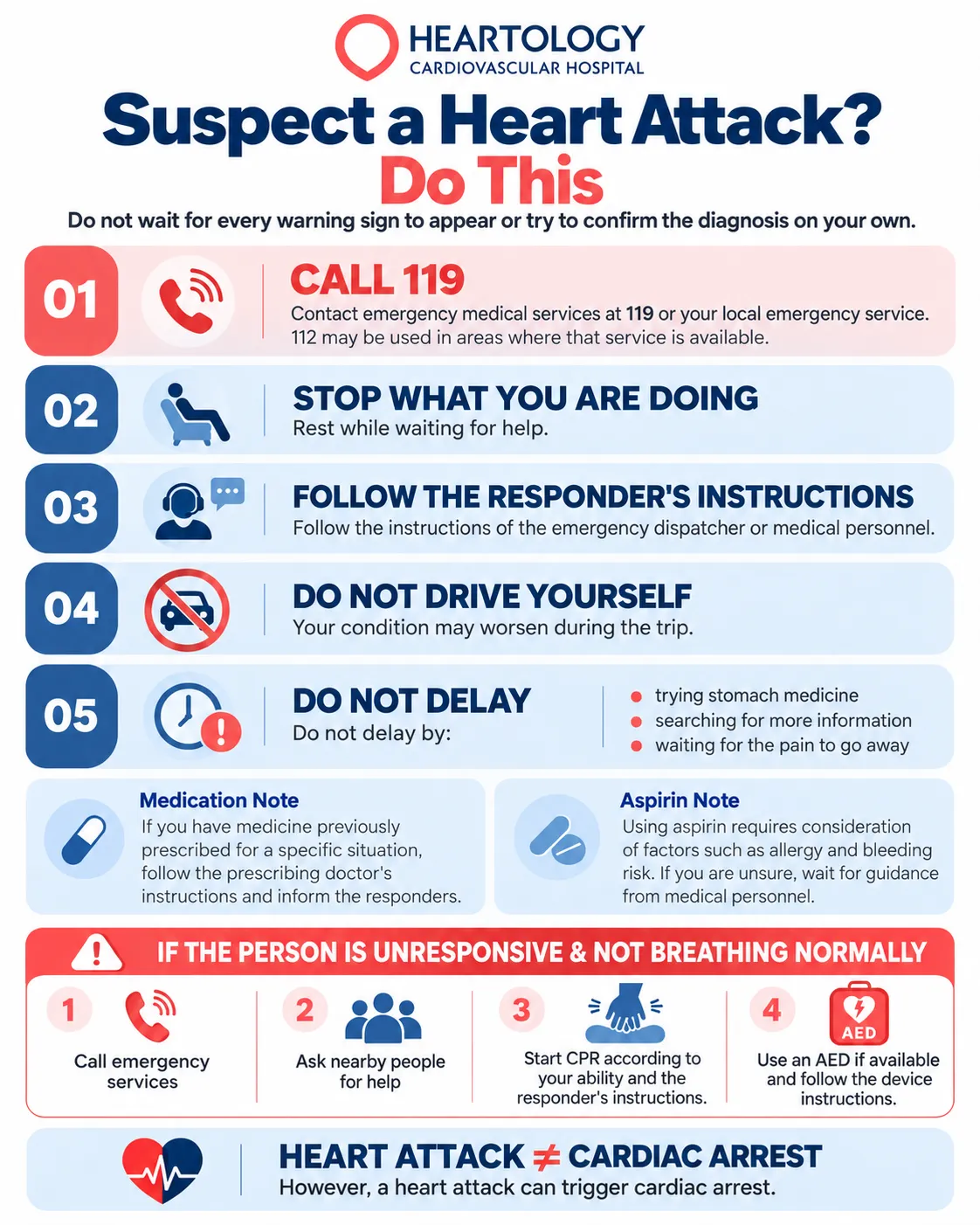
The first step if you suspect a heart attack is to call 119 or your local emergency medical service immediately. The integrated emergency number 112 may also be used in areas where the service is available. The 119 service can help coordinate an emergency response, including guidance on initial actions and ambulance access.
Source: Indonesian Ministry of Health — 119 Emergency Medical Service
While waiting for help, stop your activities and rest. Follow the instructions provided by the emergency dispatcher or healthcare professionals. Do not drive yourself to the hospital, as your condition could deteriorate during the journey.
Do not delay seeking help to try stomach medication, search for additional information, or wait for the pain to disappear. If you have medication previously prescribed for such situations, follow the prescribing doctor’s instructions and inform emergency responders that you have taken it. Aspirin use requires careful consideration, including possible allergies and bleeding risks. If you are unsure whether it is safe, wait for guidance from medical personnel. Contacting emergency services remains the priority.
If someone is unresponsive and not breathing normally, call emergency services immediately, ask people nearby for assistance, and begin cardiopulmonary resuscitation (CPR) according to your ability and the dispatcher’s instructions. If an automated external defibrillator (AED) is available, use it and follow the device’s instructions. Cardiac arrest is different from a heart attack: during cardiac arrest, the heart suddenly stops pumping blood effectively, usually because of a dangerous heart rhythm disturbance. A heart attack can trigger cardiac arrest.
[hw_info_box]
type: emergency_signs
title: Seek Immediate Medical Attention
icon: warning
description: If your symptoms suggest a heart attack, call 119 or your local emergency medical service immediately. Do not wait for all the warning signs to appear.
sign: Suspicious chest pain or pressure.
sign: Pain spreading to the arms, neck, jaw, or back.
sign: Sudden or severe shortness of breath.
sign: Cold sweats or nausea accompanied by other concerning symptoms.
sign: Severe weakness, feeling faint, or loss of consciousness.
[/hw_info_box]
Does a Heart Attack Always Cause Symptoms?
No. A heart attack is not always preceded by clear or recognizable symptoms. In some people, symptoms develop gradually. In others, they may appear suddenly or be so subtle that they go unnoticed.
For this reason, the phrase “five signs a heart attack is about to happen” should be understood as a guide to recognizing symptoms, not a way to predict exactly when a heart attack will occur.
Symptoms May Appear Suddenly or Gradually
In movies, a heart attack is often portrayed as someone suddenly clutching their chest and collapsing. Although this can happen, it does not represent every case.
In some patients, symptoms develop gradually. At first, the sensation may be little more than mild pressure or fullness in the chest. Over time, the discomfort may intensify or be accompanied by other symptoms.
Conversely, a heart attack can occur suddenly without any previously recognized warning symptoms.
These differences are related to various factors, including the mechanism of disrupted blood flow, the condition of the heart muscle, and each individual’s physical response. Because no single pattern applies to everyone, symptoms cannot be used to predict when a heart attack will occur.
Not Everyone Experiences All Five Warning Signs
The five warning signs discussed in this article are groups of symptoms intended to make recognition easier. They are not diagnostic requirements.
Some patients experience chest pain as their main symptom. In others, shortness of breath, nausea, weakness, or less typical symptoms may be more prominent.
Furthermore, a heart attack that does not cause severe pain does not necessarily mean the damage to the heart muscle is mild.
In other words, the severity of a heart attack cannot be determined solely by the intensity of the pain.
What If Symptoms Go Away and Then Return?
When discomfort subsides, it is easy to assume that the condition has improved. However, certain heart problems can cause symptoms that come and go.
Intermittent chest pain, for example, can have various causes. If it is related to disrupted coronary blood flow, the condition still requires medical evaluation.
Therefore, do not assume that the disappearance of pain proves your heart is healthy. Your doctor needs to assess the pattern and characteristics of the symptoms, as well as any accompanying complaints, to help identify the cause.
If your symptoms suggest a heart attack, seek immediate medical attention even if they have temporarily improved.
Heart Attack Symptoms in Women and Older Adults
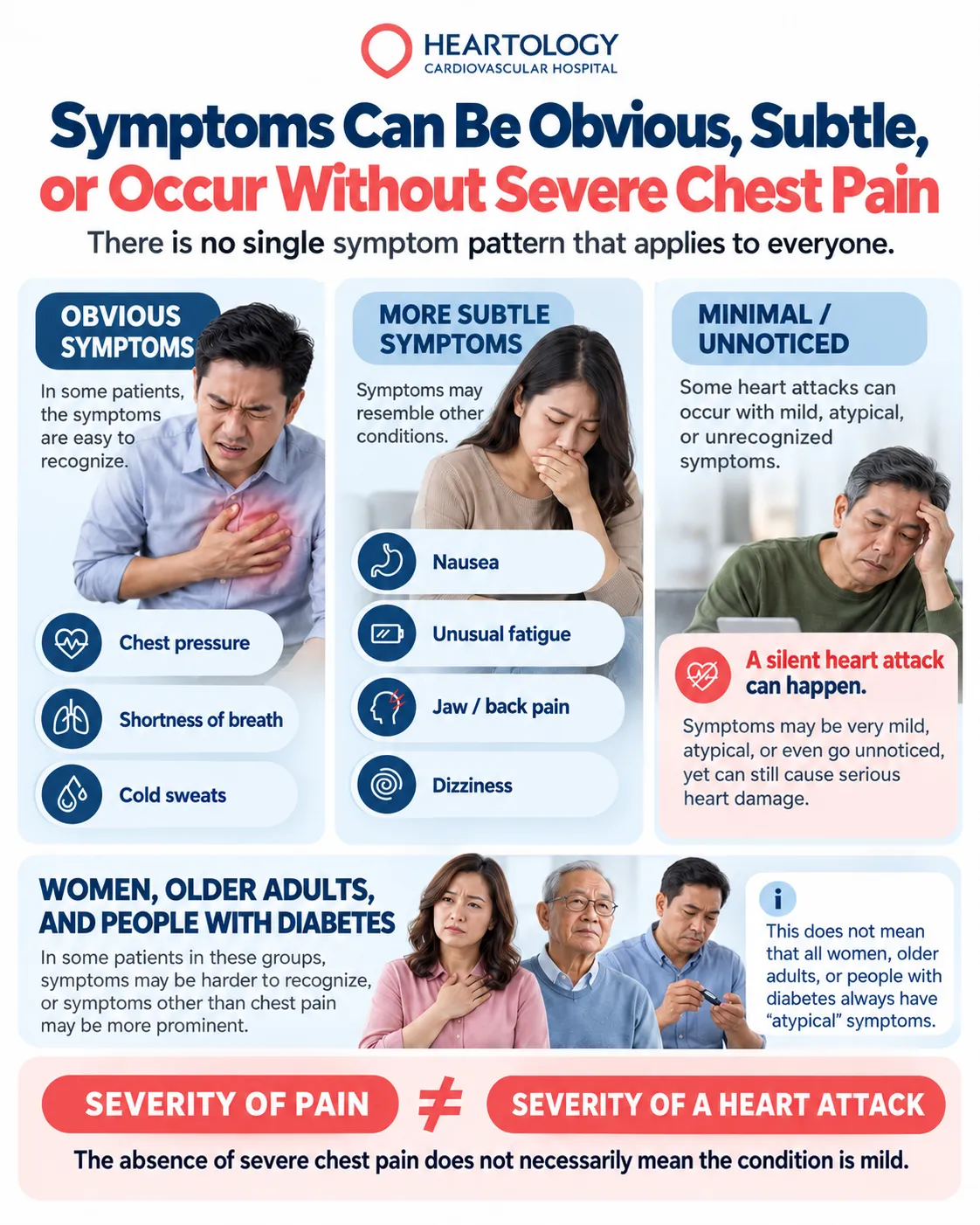
Heart attack symptoms in women, older adults, and people with diabetes may resemble the usual symptoms, but some patients also experience subtler complaints. Understanding these variations is important because not everyone experiences severe chest pain that is immediately recognized as a sign of a heart problem.
Heart Attack Warning Signs in Women
Chest pain or discomfort remains a common symptom in both women and men.
However, some women may experience accompanying symptoms such as shortness of breath, nausea, vomiting, upper back pressure, jaw pain, or unusual fatigue.
In certain patients, these symptoms may be more noticeable than chest discomfort.
This does not mean that every woman experiences a different symptom pattern from men. Assuming that women always have atypical symptoms can create another misconception. What matters most is recognizing concerning symptoms and not overlooking them simply because severe chest pain is absent.
Warning Signs in Older Adults and People With Diabetes
In some older adults and people with diabetes, a heart attack may occur with symptoms that are more difficult to recognize.
In certain people with diabetes, nerve problems can affect the ability to feel or recognize particular types of pain. As a result, symptoms related to the heart may be less noticeable. Meanwhile, in older adults, a heart attack may be accompanied by sudden weakness, shortness of breath, dizziness, or an unusual change in overall condition.
Nevertheless, not all older adults or people with diabetes experience a heart attack without chest pain.
The American Heart Association also discusses the phenomenon of a silent heart attack, which can occur with mild, atypical, or unrecognized symptoms. This condition can still cause damage to the heart muscle. For patients and their families, the key message is to pay attention to unusual changes in health, especially when someone has risk factors for heart disease.
Further reading: American Heart Association, September 2026
Heart Attack or Another Condition?
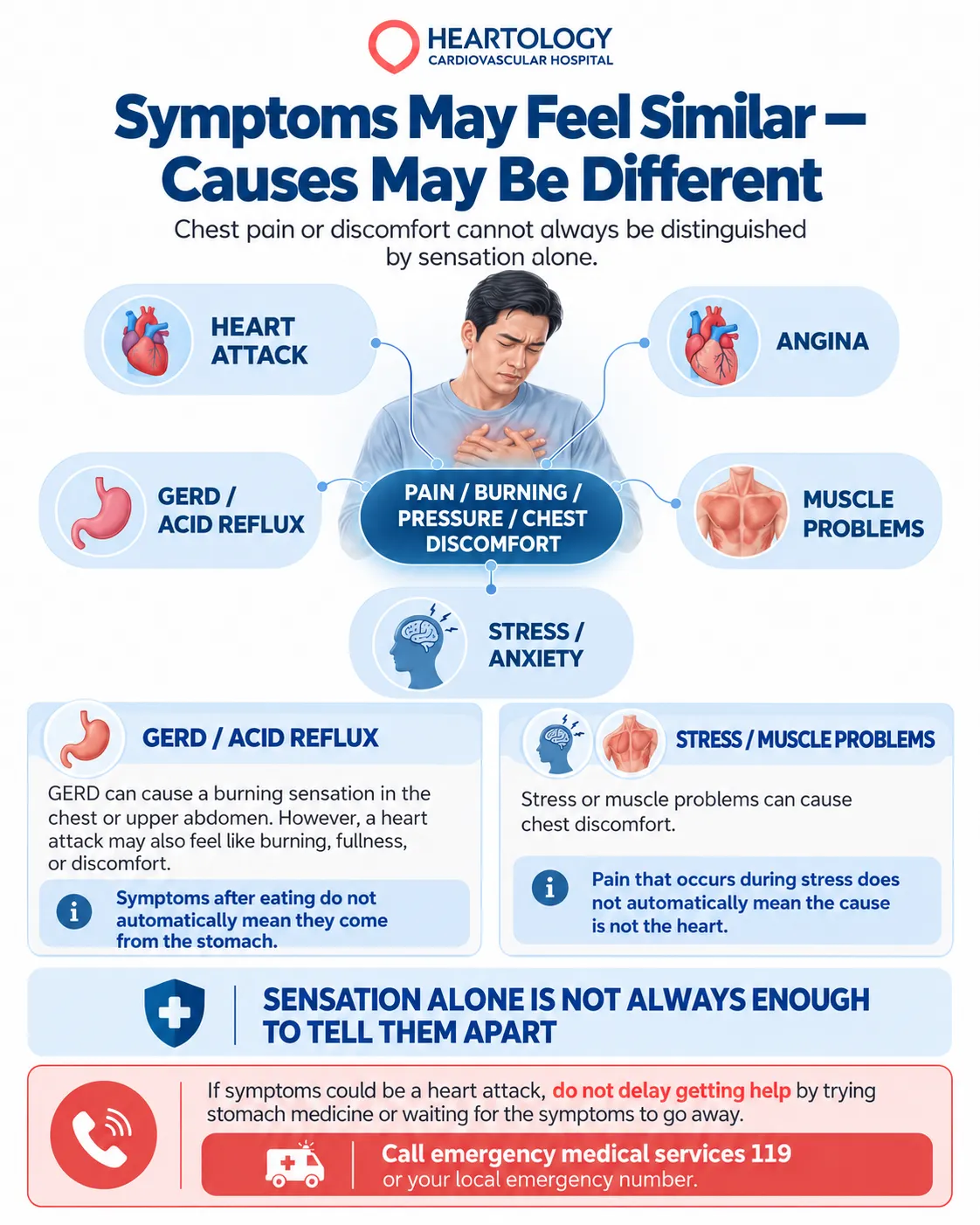
Chest pain, shortness of breath, and discomfort in the upper body are not always caused by a heart attack. Digestive problems, angina, muscle conditions, and anxiety can also cause similar symptoms.
However, these overlapping symptoms are precisely why a diagnosis cannot be made based solely on how the pain feels.
Heart Attack or Acid Reflux?
Gastroesophageal reflux disease (GERD) is a condition in which stomach contents flow back into the esophagus. It can cause a burning sensation in the chest, upper abdominal discomfort, or a sour taste in the mouth.
In some people, these symptoms occur more frequently after eating or when lying down. The difficulty is that a heart attack can also cause burning, fullness, or discomfort in the chest and upper abdomen.
As a result, the two conditions can sometimes be difficult to distinguish without a medical examination.
Chest pain that occurs after eating does not automatically mean it originates from the stomach. Likewise, discomfort that does not spread to the arm is not enough to confirm that the heart is unaffected.
If your symptoms suggest a heart attack, particularly when accompanied by shortness of breath or cold sweats, do not delay seeking help to try acid reflux medication or wait for it to take effect.
What Is the Difference Between Angina and a Heart Attack?
Angina is pain or discomfort that generally occurs when the heart muscle’s oxygen supply is insufficient to meet its needs. Angina is a symptom that may be associated with impaired coronary blood flow, whereas a heart attack involves injury to the heart muscle caused by an acute disruption of blood flow.
In stable angina, symptoms usually follow a relatively predictable pattern. For example, discomfort may occur when physical activity increases and improve with rest. However, not all angina is stable.
Chest discomfort that is new, worsening, occurs at rest, or differs from the person’s previous symptom pattern may indicate acute coronary syndrome. This term includes unstable angina and heart attack.
Both conditions can cause similar symptoms. Therefore, doctors need additional tests, such as an electrocardiogram (ECG/EKG) and troponin testing, to help distinguish between them. The difference cannot be reliably determined solely by the severity of the pain or whether symptoms improve with rest.
If an acute heart condition is suspected, seek immediate medical attention.
Chest Pain Caused by Stress or Muscle Problems
Stress and anxiety can cause various physical sensations, including heart palpitations, faster breathing, and chest discomfort.
Problems affecting the muscles or tissues around the chest can also cause pain, for example, after certain movements or unfamiliar physical activity.
For someone with a demanding work schedule, these symptoms may easily be attributed to fatigue or work-related stress.
However, chest pain that occurs during periods of stress does not automatically mean the cause is unrelated to the heart.
Doctors need to consider the patient’s medical history, the characteristics of the symptoms, physical examination findings, and other relevant information before determining the cause.
[hw_info_box]
type: doctor_tip
title: Describe Your Symptoms Rather Than Guessing Their Cause
icon: doctor
description: During your medical evaluation, explain when your symptoms began, where you feel them, whether they recur, and what other symptoms accompany them. This information helps your doctor assess your condition. However, do not delay emergency care to record these details.
show_reviewer: no
[/hw_info_box]
How Do Doctors Diagnose a Heart Attack?
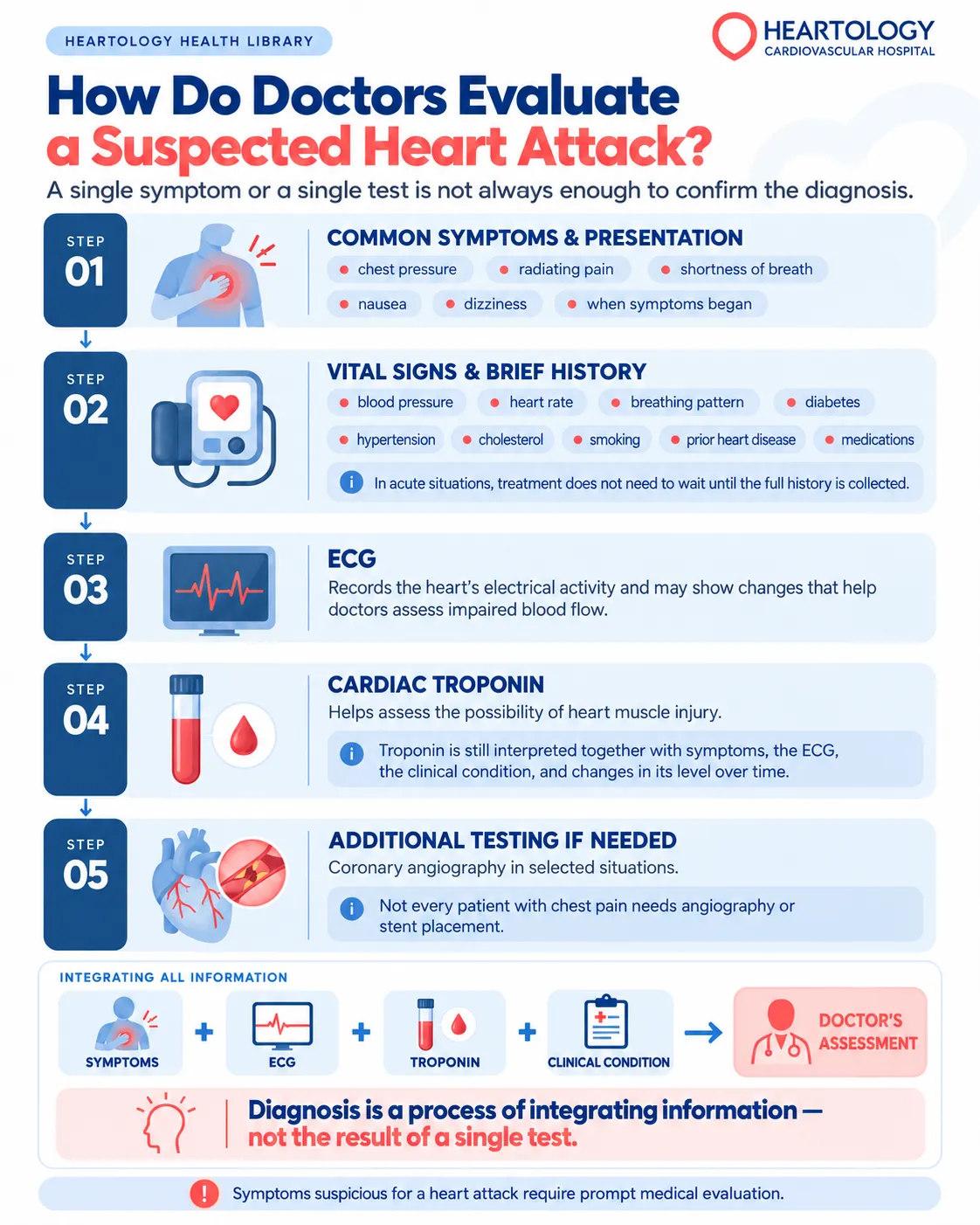
Doctors evaluate a suspected heart attack through symptoms, a physical examination, an electrocardiogram (ECG/EKG), and blood tests that measure troponin levels. Additional tests may be needed to determine the patient’s condition and the most appropriate treatment.
This evaluation is comprehensive because a single symptom or test result is not always sufficient to confirm a diagnosis.
Evaluating Symptoms and Medical History
When a patient arrives with a suspected heart attack, healthcare professionals promptly assess their overall condition and vital signs, such as blood pressure, pulse, and breathing pattern.
The doctor will also ask when the symptoms began, how the discomfort developed, and whether any accompanying symptoms are present.
A history of diabetes, hypertension, high cholesterol, smoking, or previous heart disease can also help with the assessment. Information about current medications is important because it may influence decisions about testing and treatment.
In an acute situation, evaluation and medical intervention need to proceed quickly. The medical team does not have to wait until the patient’s entire medical history has been collected before initiating necessary treatment.
Electrocardiogram (ECG/EKG)
An electrocardiogram, or ECG/EKG, is a test that records the heart’s electrical activity through electrodes attached to the skin.
When a heart attack is suspected, an ECG can reveal changes that help doctors identify possible disruption of blood flow to the heart muscle.
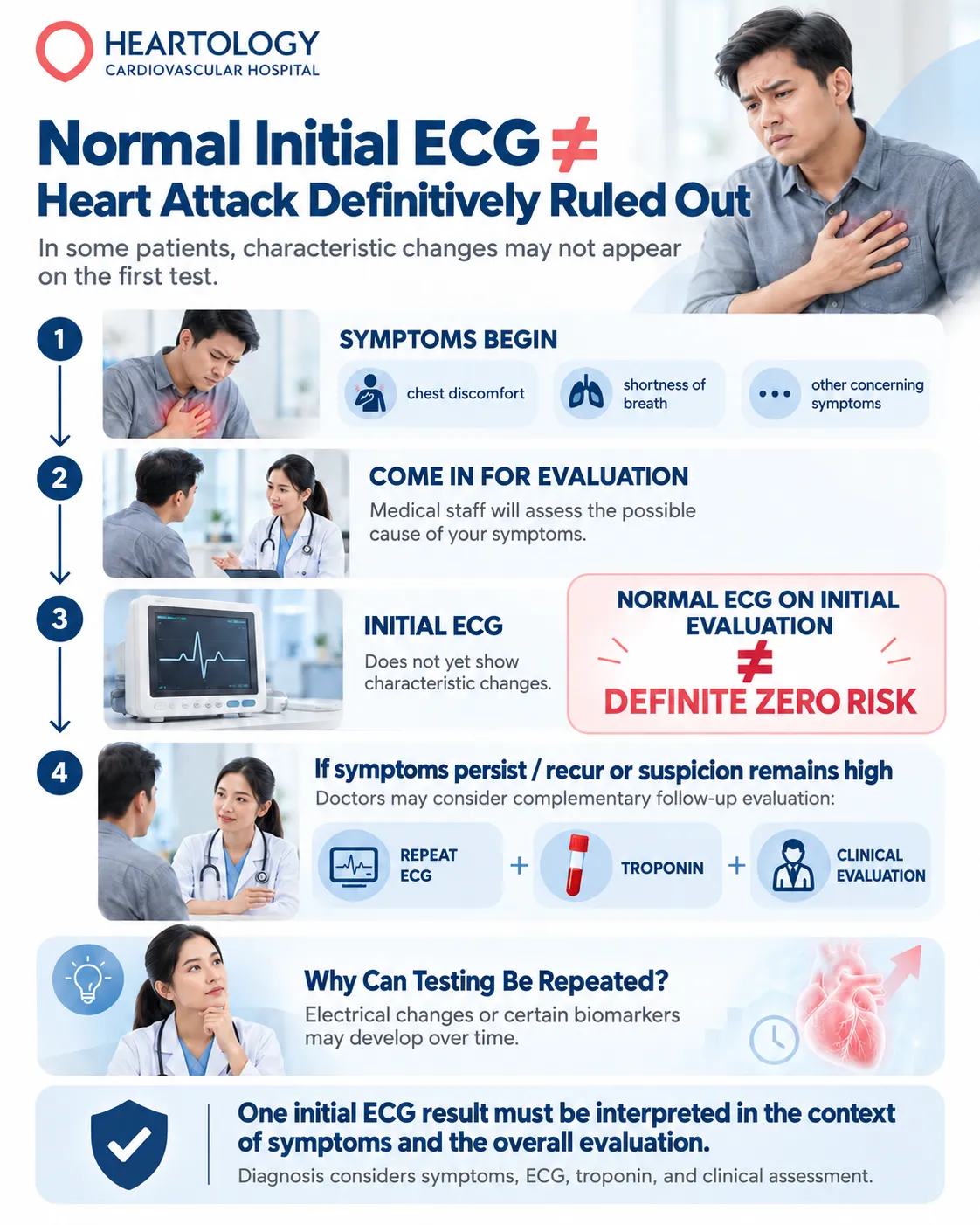
However, a normal initial ECG does not always rule out a heart attack. In some patients, characteristic changes may not yet be visible during the first examination or may develop over time.
For this reason, doctors may need to repeat the ECG, particularly if symptoms persist, return, or the level of clinical suspicion remains high.
Troponin Testing and Additional Examinations
Cardiac troponin is a protein found in heart muscle cells. When these cells are injured, troponin levels in the blood may increase.
Troponin testing helps doctors identify possible heart muscle injury. However, an elevated troponin level does not always mean that someone is having a heart attack. Doctors need to interpret the results alongside the patient’s symptoms, ECG findings, medical condition, and changes in troponin levels over time.
For patients who arrive very soon after symptoms begin, doctors may need to repeat troponin testing to obtain a more accurate assessment.
Clinical reference: 2025 ACC/AHA Guideline for Acute Coronary Syndromes
If necessary, doctors may also recommend further investigations, such as coronary angiography, to examine the condition of the heart’s blood vessels. In certain patients, the evaluation may indicate a need for coronary intervention to restore blood flow.
However, not everyone who experiences chest pain needs coronary angiography or stent placement. Doctors determine the appropriate tests and treatments based on the patient’s clinical condition and the overall evaluation findings.
[hw_body_cta]
layout: 01
color: blue
intent: consultation
hook: Meet Our Specialists
headline: Find a Heart Specialist for a Planned Evaluation
description: Once an emergency condition has been ruled out, you can explore Heartology’s specialist physicians before choosing a consultation that meets your healthcare needs.
btn1_label: Find a Specialist
btn1_url: /en/doctors/
btn1_new_tab: yes
[/hw_body_cta]
Who Should Be More Vigilant?
Everyone should be familiar with the symptoms of a heart attack. However, paying attention to heart health becomes even more important when someone has risk factors for coronary artery disease.
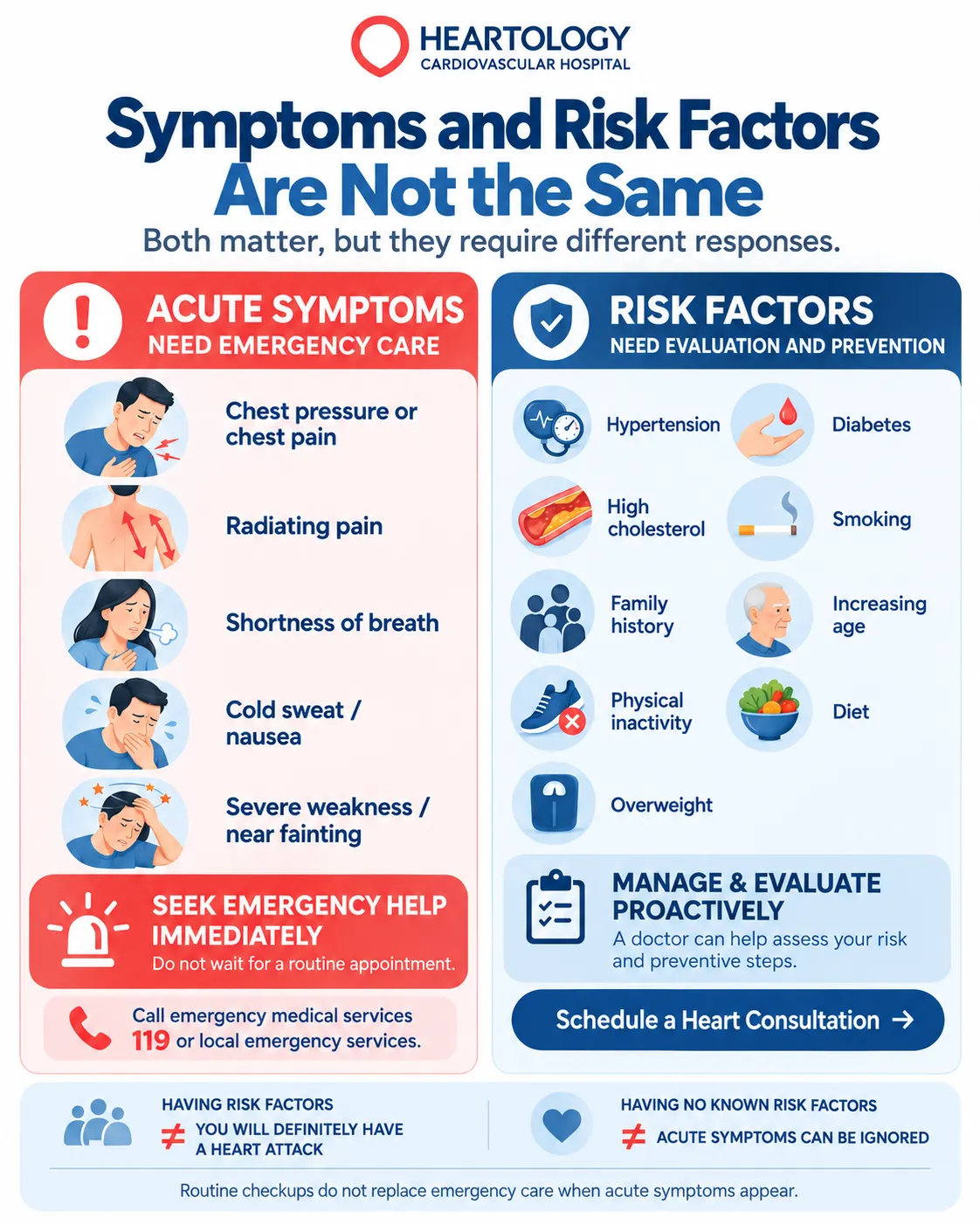
Risk factors can help doctors estimate the likelihood of cardiovascular problems and determine appropriate preventive measures. Nevertheless, a heart attack can still occur in someone without any known risk factors.
Risk Factors to Be Aware Of
Several factors that may increase the risk of coronary artery disease and heart attack include:
- Hypertension. Uncontrolled blood pressure can damage blood vessels and increase the workload on the heart.
- Diabetes. Persistently high blood glucose levels can affect blood vessel health and increase the risk of cardiovascular problems.
- High cholesterol. Elevated LDL cholesterol contributes to plaque formation within the walls of arteries.
- Smoking. Substances in tobacco smoke can damage blood vessels and increase the risk of blood clot formation.
- Family history and increasing age. Both are important factors in risk assessment, although neither can be changed.
- Lifestyle factors. Physical inactivity, eating patterns that do not support heart health, and excess body weight can also contribute to cardiovascular risk.
In addition to these factors, prolonged stress deserves attention as part of overall health. Stress can affect blood pressure, sleep quality, eating habits, and other health-related behaviors. However, stress should never automatically be used as a reason to dismiss chest pain or other concerning symptoms.
Having risk factors does not mean that someone will inevitably experience a heart attack. Conversely, having no known risk factors does not guarantee that certain symptoms can safely be ignored.
The Importance of Heart Health Evaluation
Preventing heart disease involves more than undergoing occasional health checkups. Equally important is understanding your risk factors and managing them consistently.
For people with hypertension, for example, controlling blood pressure can help reduce the risk of cardiovascular complications. Similar considerations apply to managing diabetes, cholesterol levels, and everyday lifestyle habits.
Your doctor can help determine which evaluations are appropriate based on your age, medical history, risk factors, and symptoms.
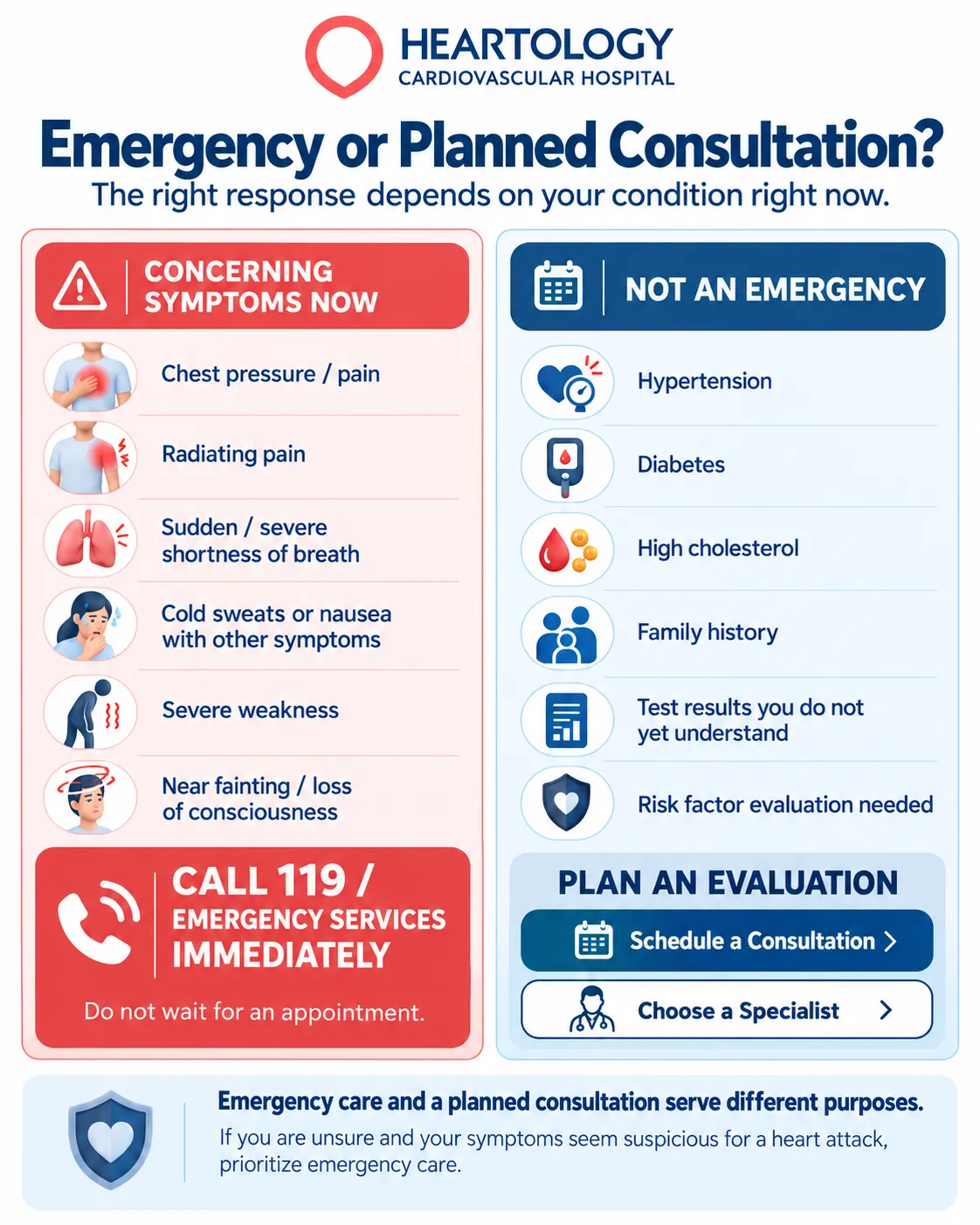
However, regular checkups do not guarantee that a heart attack will never occur. Previously reassuring test results also do not replace the need for emergency medical care if acute symptoms develop.
[hw_info_box]
type: when_to_see_doctor
title: When Should You See a Doctor?
icon: heartcheck
description: Consider scheduling a consultation to evaluate hypertension, diabetes, cholesterol levels, family history, or test results you do not fully understand. If your symptoms suggest a heart attack, seek emergency medical attention immediately rather than waiting for an appointment.
show_cta: no
[/hw_info_box]
Recognize the Symptoms and Take the Right Steps
Recognizing the warning signs of a heart attack can help you become more aware of changes in your physical condition. Symptoms may include chest pressure, pain spreading to other areas, shortness of breath, cold sweats, nausea, unusual fatigue, or feeling faint.
However, these symptoms do not always occur together, and they cannot be used to predict when a heart attack will happen.
If your symptoms suggest a heart attack, seek emergency medical attention immediately, even if the pain is not severe or has temporarily subsided.
Outside an emergency, understanding your risk factors and undergoing health evaluations based on your needs can help you plan preventive measures. Heartology Cardiovascular Hospital supports patients in understanding their conditions and care options through a personalized approach. Information about “five signs a heart attack is about to happen” is not a tool for predicting an attack, but a guide to recognizing symptoms and taking appropriate action.
Caring for every heart.
The information in this article is intended for health education and does not replace a medical examination or diagnosis by a physician. If you experience symptoms suggestive of a heart attack, seek emergency medical attention immediately.